

ABOUT
I learned to help the body heal itself, starting with my own.
For more than two decades I’ve helped people move out of pain and into a body they can trust. Here’s how I got here, and why I work the way I do.
Marty Wyrding, LMT (Martin on the official paperwork) - Licensed Massage Instructor - Movement Therapist - Creator of the Adaptive Remodeling Approach
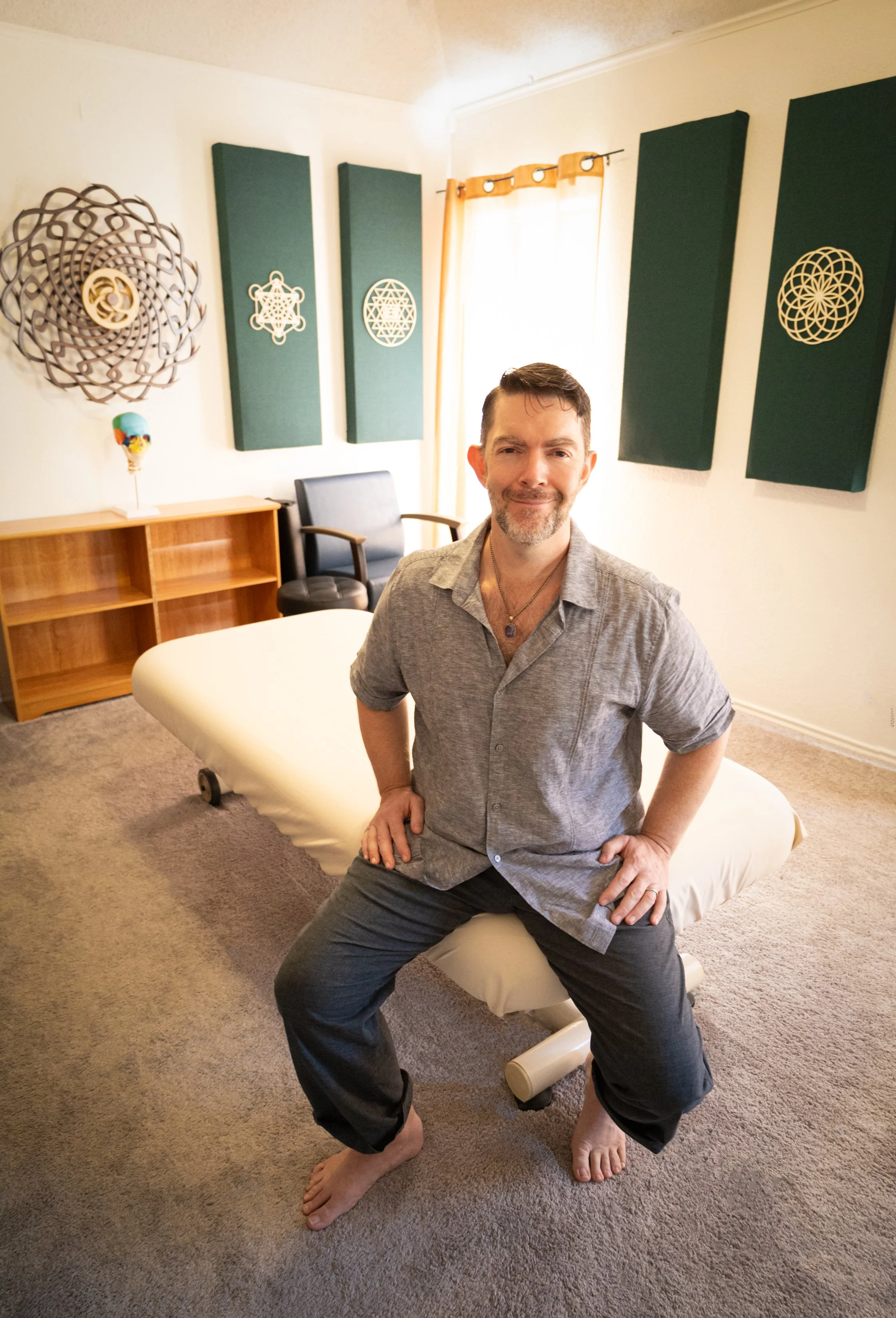
I grew up collecting injuries, hard falls from exploring the outdoors, high fevers that altered my sensory experience, a skiing crash as a teenager that wrenched my whole body nearly out of the living world. I had trained myself to push through no matter what my body was telling me. By the time I was twenty, it all caught up with me at once.
What followed was nearly two years of relentless, migrating pain, an 8 to 9 out of 10 that jumped around my body constantly and that over a dozen practitioners couldn’t explain or help me with. Four physical therapists, three chiropractors, several massage therapists, muscle relaxers and a lot of “I’m not sure why you’re in pain” from doctors. I had more or less resigned myself to a life of pain.
Then a chance conversation led me to a bodyworker and Buddhist monk named Liam. He was the first person I’d met that could actually help me. After 18 months of unbroken pain I felt real relief for the first time. Out of curiosity I tried to copy one of the things he’d done with me on a classmate. I found it fascinating to feel myself do what I’d experienced. I told Liam what I’d done and he was startled, it had taken him a year to learn to do that one thing. I asked him for lessons, he accepted and then asked me the question that set the course for the rest of my life.
MY STORY
From pain to purpose
“Do you want to learn to give a massage, or do you want to learn to heal?”
I of course told him that I wanted to learn to heal. If there was a difference between giving a massage and what he was doing with me to help me, I wanted the latter. What he taught me first wasn’t a technique, it was a way of working: “sink only to the first layer of resistance, meet it with curiosity instead of force, and let their body guide what you do next”. What I actually learned, as it turned out, wasn’t how to heal anyone. It was two things held together with a bond of humility and curiosity: how to get out of the body’s way, and how to listen closely enough that a person’s body could tell me what it needed, so that I could act on it in the moment. Enough restraint to not force things, and the sensitivity to feel what’s actually being asked for and answer it. For someone whose whole life had been about pushing through, it was a revolution. I dropped out of college where I was studying psychology, enrolled in massage school, and spent the next 5 years getting myself out of pain and learning to help other people do the same.
THE WORK TODAY
Dozens of modalities, one integrated approach
In the years since, I’ve studied constantly. Learning to weave dozens of modalities into a single, adaptive way of working. On my path I had to go deeper than acquiring tools; I had to learn to make them as well. I call the result Adaptive Remodeling.
Your nervous system keeps maps of injuries, compensation patterns, repetitive movements, stress reactivity and adaptation to adversity. Those maps made sense when they were drawn, but bodies heal and circumstances change, and when the maps don’t update, tension, restriction, and pain move in and settle.
Here’s the part that most people never hear. Over time, your body physically reshapes itself to match the maps it’s running. Connective tissue gradually takes on the form of the patterns you move through the most. A recurring stress response or a protective habit doesn’t just live in your nervous system; it becomes structural. That’s how a temporary adaptation hardens into a destructive feedback loop. The tissue reinforces the pattern, and the pattern reshapes the tissue.
Adaptive Remodeling breaks the destructive feedback loops, then builds an upward spiral of adaptive progression. It turns out the same mechanisms of neurology and physiology that drive the vicious cycle are exactly the ones that can be harnessed to reinforce progressively better patterns of adaptation and remodeling. Change happens first in how you sense your own body, then in how you move and by moving better your tissue is reshaped by biological processes that are always at work. This is why we map first, then work with sensation and precise re-coordination to change your movements. We use real time feedback to carefully adjust your movement and postural patterns and reinforce those adjustments. Then as you go about your day to day life moving differently, loading your tissues differently in every step you take, you accrue thousands of repetitions of adaptive influence. That engages your body’s constant, built-in drive to adapt, to work for you rather than against you. This is how change gets built into you, we just make sure the change is going in the right direction.
1000+
People Helped
Dozens
Modalities integrated
24
Years in practice
Constant
Studying & training
HOW I WORK
Do no harm, and be honest about it
I hold to “first, do no harm”. Not as a rule imposed on me from outside, but because causing harm genuinely feels wrong in my own body. That same honesty shapes how I talk with you. I do not do performative certainty to make you feel better about booking.
I’ll map what’s actually happening, show you what’s genuinely changeable, and be straight about what it will take. Real change is sustainable change, not just feeling better for an afternoon, but functioning better in a way that holds and adapts to changing demands. My work stands on the shoulders of dozens of mentors and thousands of hours of study. And I keep it current, following the research as the science of pain, fascia, and the nervous system evolves. I change my mind when the evidence asks me to.
TEACHING & WHAT’S AHEAD
Passing the work on
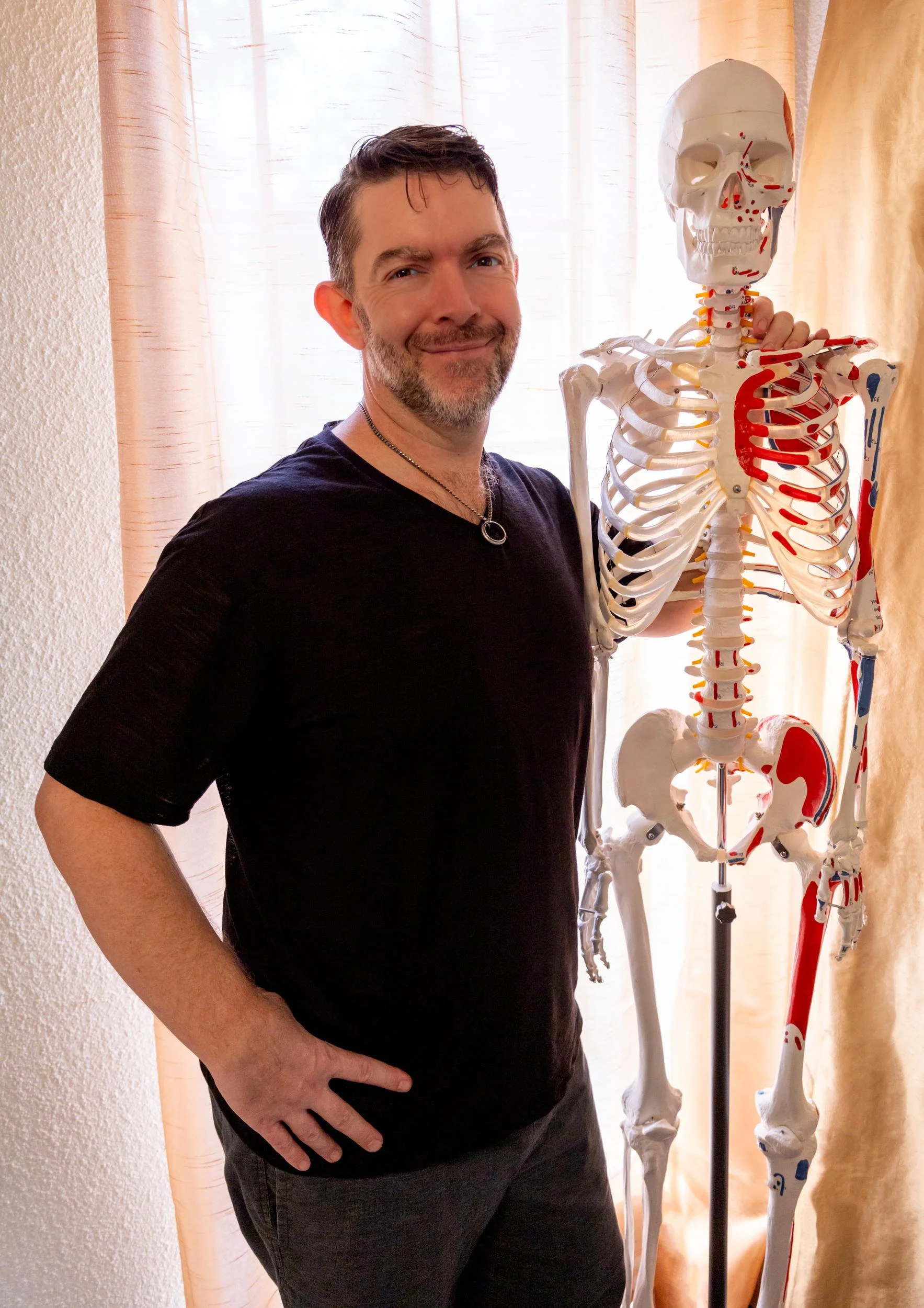
Helping other practitioners advance their skills. As a licensed massage instructor, I pass these methods on to other practitioners because this field needs therapists who can hold both the science and the human beings on the table at the same time.
Where my practice is headed is more of exactly that, deeper work with the people I serve, better teaching for the practitioners I train, and a higher bar for what massage therapy and manual therapy practitioners can do. I practice in Pflugerville TX and serve the greater Austin area.